

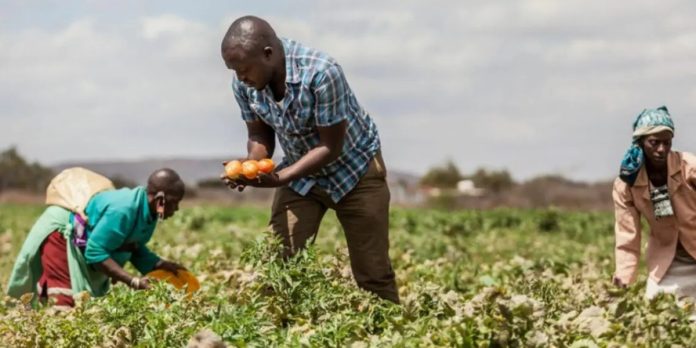
Publish-harvest losses, notably in rural areas, threaten the positive factors Africa is making in agricultural manufacturing and export capability.
In Sub-Saharan Africa, as much as 40% of farm produce is misplaced due to an absence of chilly storage, in accordance with business gamers.
Extremely perishable farm produce, like fruit and veggies, can go as excessive as 70%.
With agriculture accounting for one-third of the Gross Home Product and using over 60%, such a loss threatens jobs and the livelihoods of hundreds of thousands of individuals.
Farmers in Africa grapple with an absence of dependable refrigeration, an underdeveloped chilly chain and unreliable energy storage, leaving harvests to warmth and spoilage.
Poor street networks and restricted refrigerated transport choices additionally worsen the state of affairs. Farmers transport fruits lengthy distances to processing centres below non-ideal situations, leading to losses.
Renewable Power Presents an Alternative
On the Africa Meals Programs Discussion board in Kigali, Rwanda, specialists are exploring how renewable power can ease the burden on farmers who usually flip to diesel mills to chill their farms’ recent produce.
Olamide Niyi-Afuye, Chief Government Officer at Africa Minigrid Builders Affiliation (AMDA), an business affiliation working to enhance the working setting for mini-grids, mentioned the most important hole shouldn’t be consciousness however aggregation and intentional market design.
“We already see particular person examples of mini-grids powering agro-processing, chilly storage and different productive actions,” he mentioned.
“The problem is that these are nonetheless too usually handled as particular person tasks moderately than a part of a scalable industrial mannequin.”
Mugwe Manga, a Local weather Finance Lead at Monetary Sector Deepening Kenya (FSD Kenya), an impartial belief supporting micro and small enterprises, mentioned power presents an incredible alternative for smallholder farmers to seize extra worth from what they produce.
“Photo voltaic, more and more mixed with battery power storage, is especially essential as a result of it’s modular, more and more reasonably priced and may be deployed comparatively shortly in rural areas,” he mentioned.
“Photo voltaic-powered irrigation, chilly storage, drying, milling, cooling and agro-processing can cut back post-harvest losses, enhance productiveness, enhance product high quality and permit farmers to promote into higher-value markets.”
Manga mentioned power can grow to be an essential enabler of each local weather resilience and better farmer incomes.

“The productive use of power for chilly storage, solar-pumped irrigation, and agro-processing is crucial to worth seize, local weather resilience, and adaptation that may strengthen smallholder farmers,” he mentioned.
Nigeria, one in all Africa’s largest economies, misplaced between $2.3bn and $3.3bn to post-harvest inefficiencies in 2025, in accordance with business gamers.
The meals wasted on account of poor storage and transport networks amounted to as much as 40 million metric tonnes.
South Africa loses an estimated 10.3 million tonnes of meals yearly, about 19% of its recent produce, in accordance with a 2021 report titled Waste Analysis Growth and Innovation Roadmap Analysis.
Funding Cooperatives Is a Higher Funding Mannequin
Renewable power gives dependable and accessible options to chilly storage and processing issues in Africa, however funding stays a significant problem.
Although costs of photo voltaic panels and batteries shipped from China have been declining lately, present costs stay excessive for a lot of farmers, notably smallholders in rural areas.
With low capital amid restricted entry to grants and loans, many can not afford solar-powered agro-processing and chilly storage services.
Consultants mentioned that clear power is the most affordable expertise to deploy when farmers work collectively.
“As a result of capital expenditure of a few of these, it is crucial for farmers to organise themselves and are available collectively as a collective with the intention to reap the benefits of economies of scale and the facility of aggregation that may use power for all, versus rolling out these options to particular person smallholders that might not be cost-effective,” mentioned Manga.
Niyi-Afuye mentioned there’s a have to deliver power builders and agribusinesses collectively a lot earlier, combination demand throughout agricultural worth chains, and construction tasks round credible productive hundreds from the outset.
“The chance is to cease treating power and meals programs as two separate funding circumstances and begin constructing bankable alternatives on the intersection of each,” he mentioned.
Manga mentioned one of many key classes from distributed power is that the economics are sometimes stronger when gamers transfer away from financing particular person property for particular person farmers and as an alternative combination demand.
“Farmers can organise via cooperatives, producer organisations, aggregators or rural enterprises and put money into shared infrastructure that serves many producers,” he mentioned.
“This creates economies of scale, improves asset utilisation and creates a stronger and extra predictable income base.”
Manga mentioned aggregation additionally makes these tasks extra enticing to financiers by decreasing transaction prices and perceived threat.
“Fairly than lending towards tons of of particular person smallholders, traders can finance a productive asset with an identifiable operator, clear money flows and an aggregated buyer base,” he mentioned.
Niyi-Afuye mentioned the higher mannequin is to combination tasks into investable portfolios, mix industrial capital with acceptable credit score enhancement and risk-sharing mechanisms, and enhance entry to affected person, local-currency financing.
“Financing infrastructure in {dollars} whereas the underlying clients earn in Nigerian Naira or Kenyan shillings creates a structural mismatch,” he mentioned.
Pratik Patel, Bureau Chief for East and Southern Africa at AfriCatalyist, a worldwide improvement advisory agency headquartered in Senegal, mentioned a public-private-producer partnership is the mannequin that may make renewables reasonably priced.
“As an alternative of a chilly storage facility or chilly chain operator making an attempt to face alone as a single industrial enterprise, it’s embedded in a collective plan that covers the total journey from farm to desk, manufacturing, aggregation via farmer cooperatives, storage, processing, and market entry, with clear roles and coordination at every stage,” he mentioned.
He mentioned the method issues for financing as a result of it offers traders what a standalone facility can not, equivalent to an outlined use case, recognized long-term shoppers, and a reputable path to market.
“When accountability for every hyperlink within the chain is assigned to the actor greatest suited to handle it, the plan turns into legible and de-risked, which is what finally builds investor confidence,” he mentioned.
This text was initially revealed by Farai Shawn Matiashe at IPS