- Many businesses miss out on capital for lack of ‘business clarity’.
- Interest requirements keep many Tanzanians from conventional financial systems.
- Digital platforms are opening global investment options to local players.
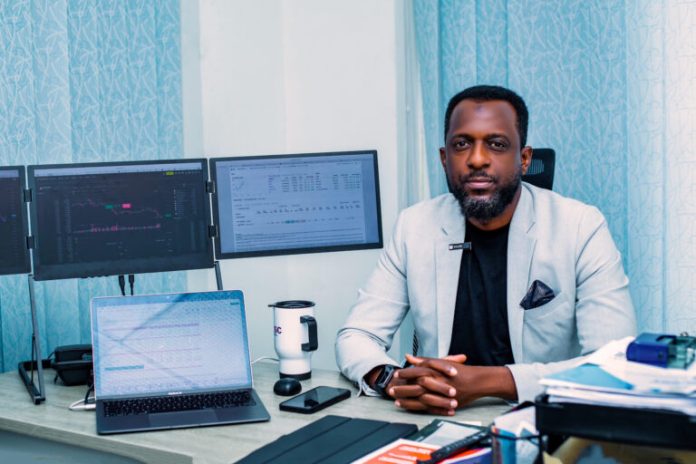
SSC Capital has over $600 million in advised transactions under it’s belt, earning a position as one of East Africa’s fastest growing pan-Africa investment consulting and investment banking firm.
Described as a ‘sector-agnostic firm,’ SSC Capital offers a hybrid of consulting and investment banking models that empower the firm with the capabilities to serve a diverse range of clients. In an exclusive interview with The Exchange, Salum Awadh, the man behind the financial magic and exemplary trajectory of the firm highlighted the performance and way forward.
QN: First of all, congratulations are in order but given the amount of success that you have achieved, congratulations seems like an understatement. What is the math behind the magic of your leadership?
ANS: Thank you, but I should say from the start that there is no magic, and it is not one man. Alhamdulillah, what you see is the work of a committed team and that of clients who trusted us earlier on. However, if there is a formula, it has three parts:
The first is clarity of purpose. We exist to build and finance African businesses, and to do it ethically. That filter tells us which mandates to take and which to walk away from.
The second is our method. Every engagement runs through our IDUDEM model: Identify, Understand, Design, Execute and Monitor. We do not hand a client a report and leave. We stay through execution and keep monitoring, which is why so many of our clients stay with us for years.
The third is the ecosystem. SSC Capital does not stand alone. Investment banking, asset management, venture capital, fintech, takaful, microfinance and financial education all sit within SSC Group and feed each other. A founder we train at SSC Academy can become a client of SSC Capital, an investee of our funds and an investor through the Shirkah App. That flywheel compounds.
QN: The numbers tell the story…SSC Capital has grown exceptionally in the last few years, skyrocketing from $300 million in 2018 to advising on over $600 million in total cumulative transactions this year. Which one among the services in your portfolio has recorded the greatest performance?
ANS: Investment banking has carried most of that growth. Capital raising, transaction advisory and restructuring account for the bulk of the USD 600 million-plus we have advised on, across more than 200 businesses and projects.
Restructuring has been especially strong because many African businesses are growing faster than their structures. We have restructured the debt and corporate structure of a school business, the capital structure of a hospital and the group structure of a diversified group. We have also advised on carve-outs and a holding company set-up for a utility, and on the exit of a real estate business. In real estate we have worked on landmark assets such as Dar Village Mall and the TBS headquarters.
The fastest-growing vertical today is institutional and endowment advisory. We designed the endowment fund for Muhimbili National Hospital, reviewed the Benjamin Mkapa Foundation’s endowment fund, and set up FCS Trust for the Foundation for Civil Society. Institutions are realising they need permanent capital, not just annual grants, and that work leads directly into asset management.
QN: Your corporate roadmap includes an ambitious strategy to scale up your asset management ecosystem to clock a $1 billion in Assets Under Management. What is the progress so far, or rather, what is the value of assets under your management to date?
ANS: The USD 1 billion is a long-term ambition, and we say it openly because a target concentrates the mind.
Our near-term milestone for Shirkah Asset Management is to reach USD 200 million in AUM by 2030, and the pipeline supports it. Shirkah is a CMSA-Licensed investment advisor, once we secure our fund management license, the billion-dollar will be much closer, as we also implement our regional expansion.
On the retail side, the Shirkah App and partnerships with payment platforms will bring in thousands of smaller investors. Our Mbadala Fund, now being repositioned as a dedicated climate fund, adds another pool. Together, these make the billion a matter of execution and time, not a dream.
QN: An impressive approach of SSC Capital, thanks to your visionary leadership, is the fact that, you do not only serve as a traditional boutique advisory house, rather, SSC Capital has scaled to cover mega infrastructure deals. Could you shed light on the ongoing $512 million Kitonga Electric Power Co. (KEPOCO) in Iringa?
ANS: Infrastructure is where Africa’s biggest gap is, and it is also where advisory makes the biggest difference. Large projects rarely fail for lack of an idea. They fail because they are not bankable. Our job is to make them bankable.
As for KEPOCO, we will be raising a total of USD 512 million as a total project value, our current tranche raise is USD 62 million, which is not closed yet.
Our general approach to infrastructure has four steps. First, we test the fundamentals through feasibility work: demand, offtake, technical and environmental risk. Second, we build a robust financial model and a capital structure that layers equity, concessional debt and commercial debt so each investor gets a risk they understand. Third, we take the deal to the right capital: development finance institutions, pension funds, banks and, increasingly, sukuk and climate finance. Fourth, we stay with the sponsor through financial close and beyond. Our edge is that we understand both the local context and the language of international investors, so we can sit in the middle and close the gap.
QN: Another example of your visionary leadership choices is that not only has SSC Capital branched out its Regulatory Licensing servics to cover CMSA-licensed Shirkah Asset Management vehicle that has impressively captured the growing retail and institutional demand for interest-free, profit-sharing Shariah investment model but it has also leveraged automated tech frameworks for crowd-sourced micro-investment. Please elaborate on this particular investment model and how is it been received, what is your current portfolio so to speak?
ANS: Shirkah Asset Management is licensed by the Capital Markets and Securities Authority, and it is built on a simple idea: your money should earn a return through real economic activity, not through interest. We work on profit-sharing and agency (wakalah) structures. The investor and the manager share in real outcomes, and the manager’s fee is transparent.
We screen listed equities on the Dar es Salaam, Nairobi, Uganda and Johannesburg exchanges against AAOIFI Shariah standards, and we build sukuk portfolios across instruments such as the CRDB Al Barakah Sukuk, KCB Mapato Sukuk and the Zanzibar Sukuk. For institutions we offer an end-to-end cash waqf service: we design the waqf, launch it, collect contributions through the Shirkah App, invest the funds and manage the payouts.
The crowd side is where technology comes in. Through the Shirkah App a person can start investing with a small amount from their phone, and a community can pool money behind a business it believes in.
The reception has been very encouraging, from individuals and from institutions such as universities, religious bodies and foundations. Today we serve more than 1700 retail investors, close to 100 HNWIs, and institutional clients.
Also Read: Shelter Afrique closes landmark $100 million sustainable bond to fund housing
QN: SSC Capital is edging closer to the forefront of Islamic finance in Tanzania. What makes Shariah-compliant asset management and micro-takaful frameworks such an explosive, untapped growth vector for the broader Tanzanian economy?”
ANS: Because it brings in capital that is currently sitting outside the system. A large share of Tanzanians have deliberately stayed away from conventional savings and investment products because of interest requirements that are not in line with their religious or ethical beliefs. That is not a lack of money. It is financial exclusion by conscience. Give these people a product that aligns with their beliefs and one that they can trust and you unlock savings that can finance businesses, homes and infrastructure.
Second, Islamic finance is asset-backed by design. Every shilling must be tied to a real asset or a real business, which keeps the money in the productive economy and reduces speculation. Sukuk can finance roads, energy and housing directly.
Third, waqf and endowments create permanent capital for education, health and social causes, and that capital is invested for the long term.
Fourth, takaful, and micro-takaful in particular, is a cooperative model of protection that suits informal workers and small traders who are underserved by conventional insurance.
Finally, these products are not only for Muslims. Many investors of every faith want ethical, transparent, risk-sharing finance. That is why we see this as a growth engine for the whole economy, not a niche.
QN: You are moving aggressively into fintech automation with the development of the Shirkah App and the Wengi crowdfunding platform. How does transitioning from traditional, high-touch institutional boardrooms to automated, mobile-first retail investment applications alter the cost structures and scaling dynamics of SSC Group?”
It changes the economics completely. Traditional advisory is high-touch. Revenue grows roughly in line with the number of senior people and hours you have, so it is valuable but linear.
Technology breaks that line. Building the Shirkah App and Wengi required a big upfront investment in technology, compliance and licensing, but after that, the cost of serving one more investor is close to zero. A small investment of a few thousand shillings is uneconomic to serve in a boardroom. On a phone, aggregated across thousands of people, it becomes a meaningful pool of capital.
The two models also reinforce each other. Our institutional relationships become distribution channels. A company we advise can offer its staff a financial wellness programme and an investment club through the app. A partner bank or payments platform can bring its customers. A cash waqf we design for an institution collects its contributions digitally.
So we keep the boardroom for complex, bespoke work, and we use technology for scale. That combination is what will take SSC Group from a successful advisory firm to a global investment platform.
QN: Unlike traditional investment banks that keep their intellectual property closely guarded, you built the SSC Academy in Masaki to train entrepreneurs and NGOs. How does this educational pillar serve the firm’s broader commercial ecosystem, and what have you learned about the state of financial literacy among SME founders?
We believe the market is too small for us to guard knowledge. If we keep it to ourselves we stay a boutique but if we share it, we grow the whole pie. SSC Academy is not a charity, on the contrary, it is market-building.
Commercially, it works on several levels. Founders and NGO leaders who go through our programmes become better-prepared clients, investees and co-investors. We see promising businesses long before they are ready to raise, which strengthens our deal pipeline. And it builds trust in the SSC name. Our track record includes the XPOT export-readiness programme, the Pesa Smart programme with KCB Bank, three years of FUNGUO and ANZA cohorts with more than 200 beneficiaries, WEZESHA for women entrepreneurs, and training NGOs and universities on financial sustainability and endowment funds.
What have we learned? Most SME and startup founders know their product very well but do not know their numbers. Personal and business money are mixed, records are weak and governance is informal. Many think financing means only a bank loan and are unaware of equity, profit-sharing or venture capital. The good news is that these gaps can be taught. When founders fix them, their access to capital changes dramatically.
QN: If you could narrow it down to a single, defining characteristic, what separates the founders who successfully raise capital from SSC Capital’s funds from the hundreds who face rejection in the screening phase?
Clarity. The founders who raise capital know exactly what their business is, what the numbers say and how every shilling they raise will turn into growth.
Most of the businesses we decline are not bad businesses. They are unclear. The financial records do not tie up, the founder cannot explain the unit economics, governance is all in one person’s head, or the plan for the money is simply “expansion”. An investor cannot price uncertainty, so they walk away.
QN: A single interview cannot even begin to cover the achievements that SSC Capital has pocketed under your leadership but until next time, what is in store, where do you have your eyes set on?
Thank you, and inshaAllah there will be a next time. Our focus now is to move from building a firm to building a group. SSC Group is expanding beyond Tanzania to Kenya, Uganda, Rwanda, and South Africa.
As SSC Group of companies, we will be venturing into other sectors as well…we want to replicate the success we have had in the financial sector elsewhere.
At the end of the day, what is most important is that we are investing in people. The real measure of success is an institution that runs and grows without depending on its founder. If in ten years SSC Capital is a pan-African group led by a strong team that we developed, creating businesses and jobs across the continent, then we will have done our work.
Read also: Africa’s $150bn food import bill pain point and why agritech startups are not solving the problem yet