

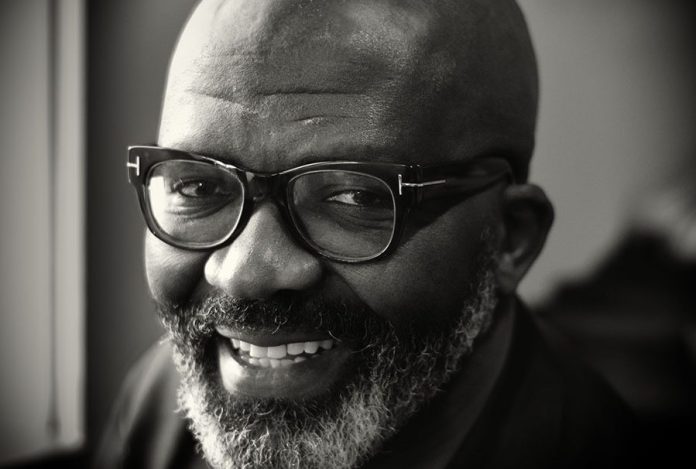
“What I would really like individuals to remove, after seeing Ben’Imana, and Girl, and Cotton Queen, I would like them to remove narratives which might be so authentic, so real.” – Keith Shiri
By Vivian Nneka Nwajiaku
The thirteenth version of Movie Africa, a number one UK pageant for African and African diaspora cinema, begins this week underneath the theme: “125 Years of Storytelling and Film Making in Africa”. Introduced by the Royal African Society in celebration of its one hundred and twenty fifth Anniversary, the pageant brings collectively an attention-grabbing lineup that features among the most generally travelled African movies of the yr alongside promising movies from throughout the continent and its diaspora.
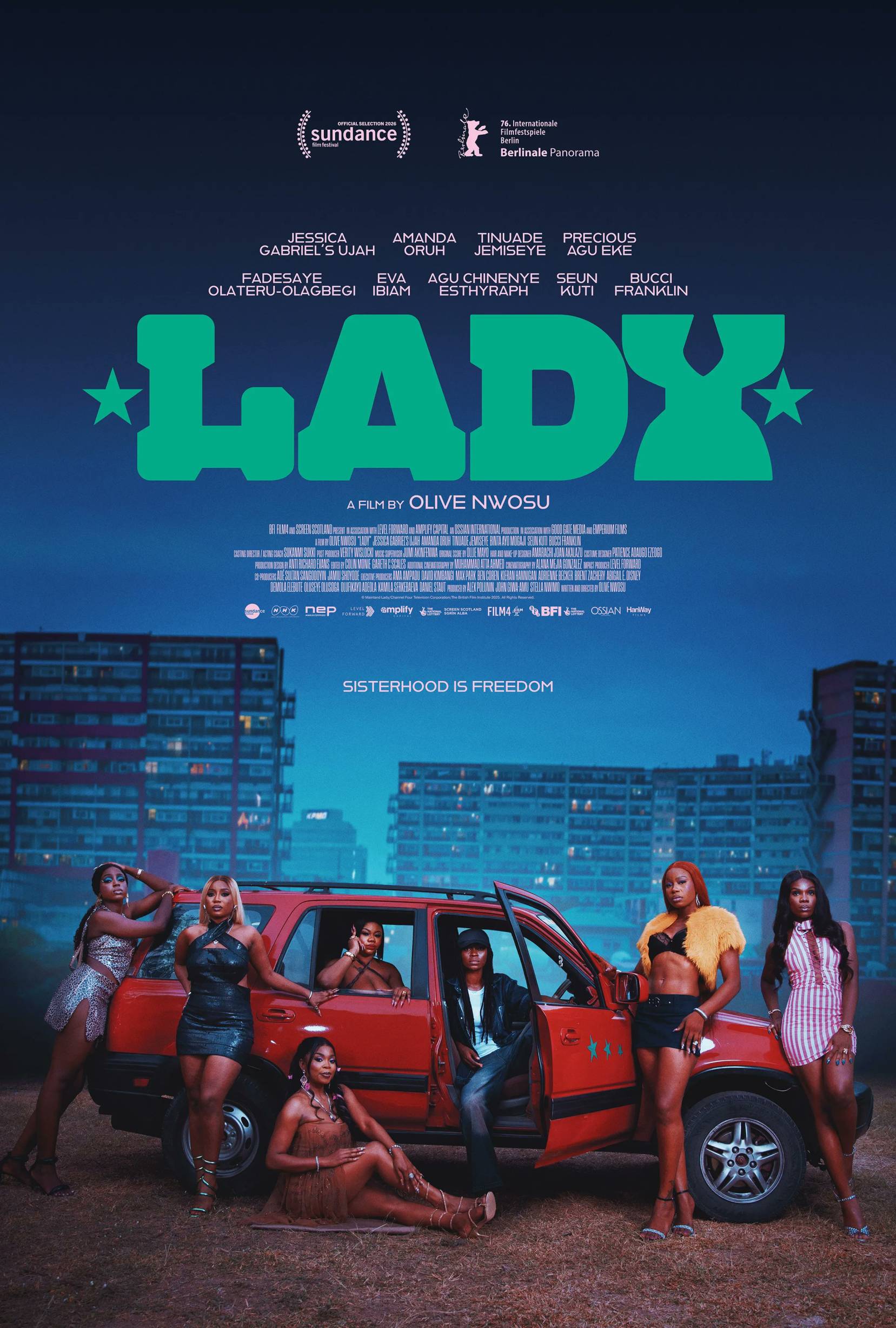
Curated by Keith Shiri, a global curator of African artwork and movie, Movie Africa will open on twenty third October with Marie Clémentine Dusabejambo’s Ben’Imana (2026), which received the Caméra d’Or on the Cannes Movie Pageant, and shut on 1st November with Olive Nwosu’s Girl (2026), which received the World Cinema Dramatic Particular Jury Award for Performing Ensemble on the Sundance Movie Pageant.
Each movies bookend a programme that foregrounds feminine filmmakers and women-centred tales. This emphasis extends to “Twende: African Girls and Cinema”, a symposium introduced in partnership with the BFI Southbank to offer a platform for dialogue, reflection and viewers engagement across the contribution of African ladies filmmakers to up to date world cinema.
Shiri brings many years of expertise in programming, with a deal with African cinema, to this yr’s version. He served as a member of the Berlinale World Cinema Fund from 2004 to 2007, and has suggested and programmed for outstanding movie festivals, together with the Venice Movie Pageant, Toronto Worldwide Movie Pageant, and the BFI London Movie Pageant, with a deal with African cinema. He’s additionally a founding director of Africa on the Photos and a member and juror of the Africa Film Academy Awards (AMAA).
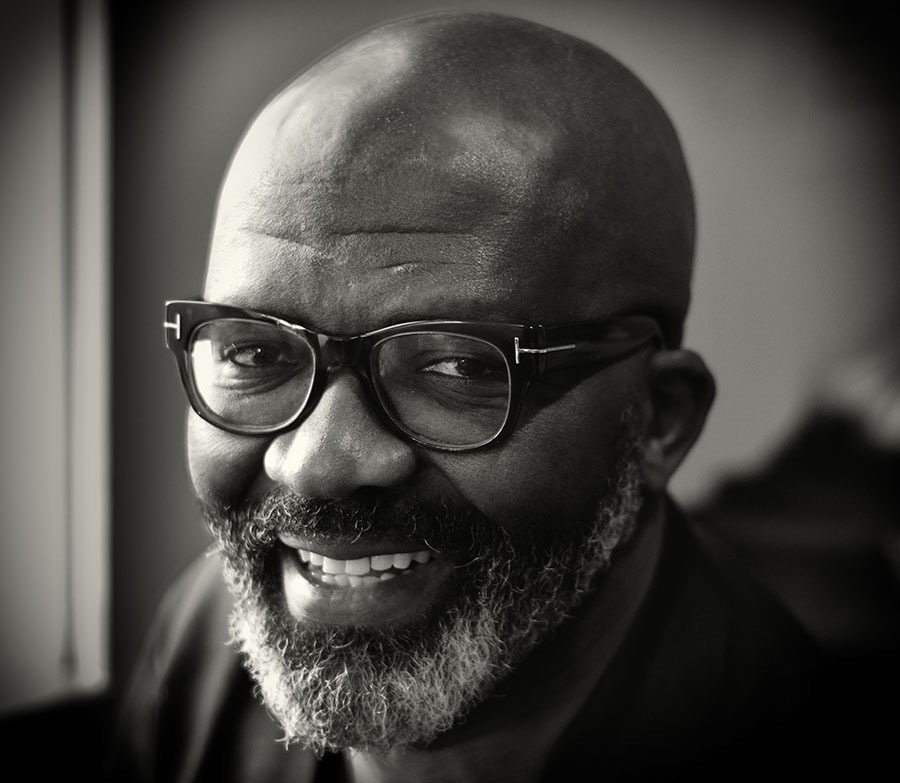
Along with his work at Movie Africa, he was not too long ago introduced because the Pageant Programmer and Jury Coordinator for the 2026 Africa Worldwide Movie Pageant (AFRIFF), scheduled to open on 1st November.
On this interview forward of Movie Africa 2026, Keith Shiri speaks with Afrocritik in regards to the pageant’s women-centred programming, the variety of African cinema, and the assist wanted to maintain the business’s inventive momentum.
* This interview has been edited for size and readability.
What conversations, preoccupations, or developments in African filmmaking have stood out to you this yr and in curating the pageant?
I’ve been taking note of what’s happening. As we communicate now, I do know what’s going to occur in 2027 or 2028 as a result of I’m following individuals’s careers. Most of those movies don’t come from FilmFreeway, as plenty of festivals do. I get direct hyperlinks from filmmakers, a few of whom I’ve recognized for quite a lot of years, together with the opening movie, Ben’Imana, by Marie Clémentine. There’s at all times been a narrative about what occurred in 1994, the genocide in Rwanda. So many movies have been made, documentaries, about what occurred. However she approaches it a unique means. She takes this private journey with these ladies who’re a part of these sorts of recoveries. That’s the opening movie.
The closing movie is Girl. It’s a couple of lady’s story, a lady behind the digital camera, and directing the manufacturing. The manufacturing is all ladies. We additionally [have] a movie known as Pricey Ajayi, which isn’t by ladies, nevertheless it’s a really important movie (about ladies) from Nigeria, which we’re fairly enthusiastic about. And we now have one other movie known as Her Daughters’ Mom; we’re going to have a world premiere at EbonyLife Cinemas, which is sort of extraordinary.
We’re going to have filmmakers who’re largely ladies. I wasn’t deliberate in getting into search. I used to be searching for movies. After which to understand that African ladies have been embracing digital expertise to guarantee that they personal the story, which is an influence in itself. And I believe that it was then I made a decision that we would have liked to connect the screenings with a symposium on the next day, on the twenty fourth, which is “African Girls and Cinema”, which form of has all of the lists of girls from historical past, from the archives, and to the long run.
Once we speak about African cinema, we’re speaking about cinema that solely began to exist [after] independence. The pioneers of African cinema, the ladies had been solely two, perhaps three throughout that point. Safi Faye from Senegal, for instance, and Sarah Maldoror. Now, should you go to Kenya, for instance, seventy or eighty p.c of administrators coming from Kenya are ladies. The business in Nigeria is dominated by ladies. It’s fairly apparent that we now have to have this sort of vital dialog the best way we do. I’m only a curator, however I’m responding to what’s been happening round us. And it’s only a dialog I’m suggesting to lots of people.
What do you hope that audiences this yr will take away from Movie Africa, on the subject of the pageant’s curation round women-centred cinema?
We’re addressing an viewers [that] typically they don’t go to see movies as such. We’ve acquired a big demography of Africans who reside in the UK. They don’t go to the London Movie Pageant, for instance, however should you create an structure or one thing very fairly speedy to them, after which supply them areas that we’re going to supply them? I hope it may well proceed, together with the truth that we now have this new cinema by Mo Abudu (EbonyLife Cinema, London).
As a result of there’s a lot coming from Africa proper now. It’s unimaginable. I believe there’s a buzz and vitality that’s coming from African creatives, not solely about movie, but additionally artwork. It’s really so actual, produced by Africans and directed by Africans, and with all the boldness, particularly by ladies filmmakers.
What I would really like individuals to remove, after seeing Ben’Imana, and Girl, and Cotton Queen, I would like them to remove narratives which might be so authentic, so real. I’ve by no means seen Lagos being portrayed the best way this movie (Girl) is finished. That bridge, I do know some individuals don’t even shoot; they use drones. They will’t negotiate the [toughness], however they did that, these ladies. And most of them are unseasoned actors, these ladies in that movie. That’s expertise. They’re not celebrities, however they provide you some form of dimension of cinema. I like while you see issues like that.
And alternatively, there have been additionally some polished filmmakers, just like the Esiri brothers, who have gotten the movie known as Clarissa, an adaptation. It additionally offers you a way of Lagos, however in a form of very particular area. It’s a fully lovely drama. Superbly carried out by the actors in it.
So, what I’d like individuals to remove from it’s the variety of African aesthetics. Like Pricey Ajayi, which premiered in Venice. It’s a gorgeous movie. It’s completely tough across the edges, nevertheless it really means that you are able to do cinema that’s actually in sync with your individual actuality.
So, there [are] at all times all these large nuggets I’m simply discovering on a regular basis. I am going again once more [to] the programme and say, I can’t consider that we did that, and I can’t consider this version. And that’s what we’re providing proper now. We’ve acquired the menu. I hope persons are going to be glad. So, they go to the restaurant and see the menu, and say, “I like that, I like this one”. After which, we will have a dialog afterwards to say, “What did you concentrate on the programme itself?”
It’s attention-grabbing that you just speak in regards to the variety of aesthetics in African filmmaking, as a result of there appears to be a sure expectation concerning the sorts of African movies which might be welcome at worldwide festivals. As an Africa-focused pageant, how do you make sure that the Movie Africa programme does mirror the variety in African filmmaking whereas additionally capturing the continent’s presence on the worldwide movie pageant circuit?
When you concentrate on Africa, have a look at the geography, like with the African Union. I’m speaking from Algeria to Zimbabwe. So, I embody international locations of the Maghreb, international locations from West Africa, from Southern Africa, from East Africa, after which you’ve got that form of various narrative, together with the islands of Madagascar and Seychelles, for instance.
That’s a various inhabitants in itself. You have a look at the best way we’ve at all times been evolving and travelling from one place to a different. And that form of, like, lived experiences on the continent. That’s various. For me, it’s mirrored within the programme that we current. We’ve acquired movies from the Maghreb; we now have movies from Tunisia; we’ve acquired movies from Morocco; we’ve acquired movies from Algeria; we’ve acquired movies from Nigeria; we’ve acquired movies from Zimbabwe. We cowl the entire continent. However we additionally contact on the Diaspora, Africans who’re dwelling in Europe, their lived expertise of Africa. And the variety of it really contains languages and gender.

That is the model, Movie Africa, and that’s what we suggest. And I believe that my strategy to cinema is at all times studying from the motion of individuals on the continent. So, the variety of the continent itself is [in the] lived experiences throughout the histories of the continent itself. We attempt to exhibit the mosaic of the continent. The structure is gorgeous structure, with its wounds, its darkness, its mild, with all the pieces else there’s about it.
Spotlighting underrepresented filmmakers and tales is vital work, however what duties do you suppose festivals have past programming and exhibition, and the way does Movie Africa specifically try to maneuver the needle, particularly for African ladies filmmakers?
After this programme, I’m coming to Lagos for AFRIFF, however I’ll come again once more for the Africa Film Academy Awards. After which, after that, I’m going to display screen one or two movies in Oxford, for college kids who wish to be taught in regards to the historical past of African cinema. There’s a documentary known as Digital camera d’Afrique, which I at all times counsel that college students of African cinema ought to use as a reference level to grasp the historical past of cinema itself.
And I believe, past Movie Africa, we wish to form of proceed to assist the movies, on condition that distribution of a few of these movies is so troublesome. So, you wish to make it a significant journey for among the movies. They may go to Bristol and different venues exterior London. And we’re taking some movies to Oxford in November and, in fact, subsequent yr, as we put together for the subsequent programme. And I believe that for me, that’s the legacy.
I do hope that the symposium that we’re going to have goes to supply some vital debates, as a result of there are very particular ladies who’re coming to this symposium. I’m simply wanting ahead to that.

Contemplating the elevated consideration that African cinema has been having fun with on the worldwide stage for a while now, are you optimistic that that focus will be sustained and improved? And for that to occur, what adjustments do we have to make within the subsequent few years?
I believe the gates are open now. I imply, there as soon as upon a time when it was unimaginable to even start to speak about African cinema. Now, African cinema is starting to go to Sundance, to go to Venice. It by no means was once the case previously. The gatekeepers would say, “No, it’s probably not ok. It needs to be inside the usual in order that we will perceive it.” I stated, “No, I can perceive Italian cinema. You don’t have to elucidate to me. It’s not that obscure, to watch life, to watch the portray. Actuality doesn’t essentially should be spoken in your means.” However the fantastic thing about cinema is a mixture of moods, about rain, about mild, sunshine, empathy, all the pieces that’s about consideration.
There are billions of individuals struggling to say, “I wish to let you know my very own story. I do know your story. I do know John Wayne, I do know The Cowboys, I do know Tarzan, I do know all the pieces there’s about you, however you don’t know very a lot about me.”
Everybody will find yourself benefiting from the variety of how we exist on this planet. And I believe that’s so vital. The gates are open. Issues are slowly coming to an attention-grabbing place. However I do hope that we get extra of that, not simply from Africa, however from the remainder of the international locations within the South, whether or not South America, Asia and different locations.
What they’re doing at Purple Sea Worldwide Movie Pageant, which [has only been] operating for six years, is so spectacular. They’re funding movies from international locations within the South and Africa and so forth. Ben’Imana is a beneficiary of the Purple Sea Basis initiative. And that’s what we must always do additionally in Africa. We have to create funds which might be essential to have our creatives to develop and [to] establish the abilities, and assist from the start as much as the tip.
*Particulars of the programme can be found on the Movie Africa web site.
Vivian Nneka Nwajiaku is a author and movie critic writing from Lagos. She has a grasp’s diploma in legislation however spends most of her time consuming, finding out and discussing movie and TV. She’s significantly involved about what artwork has to say about society’s relationship with ladies. Join together with her on X @Nneka_Viv