📄 Paper
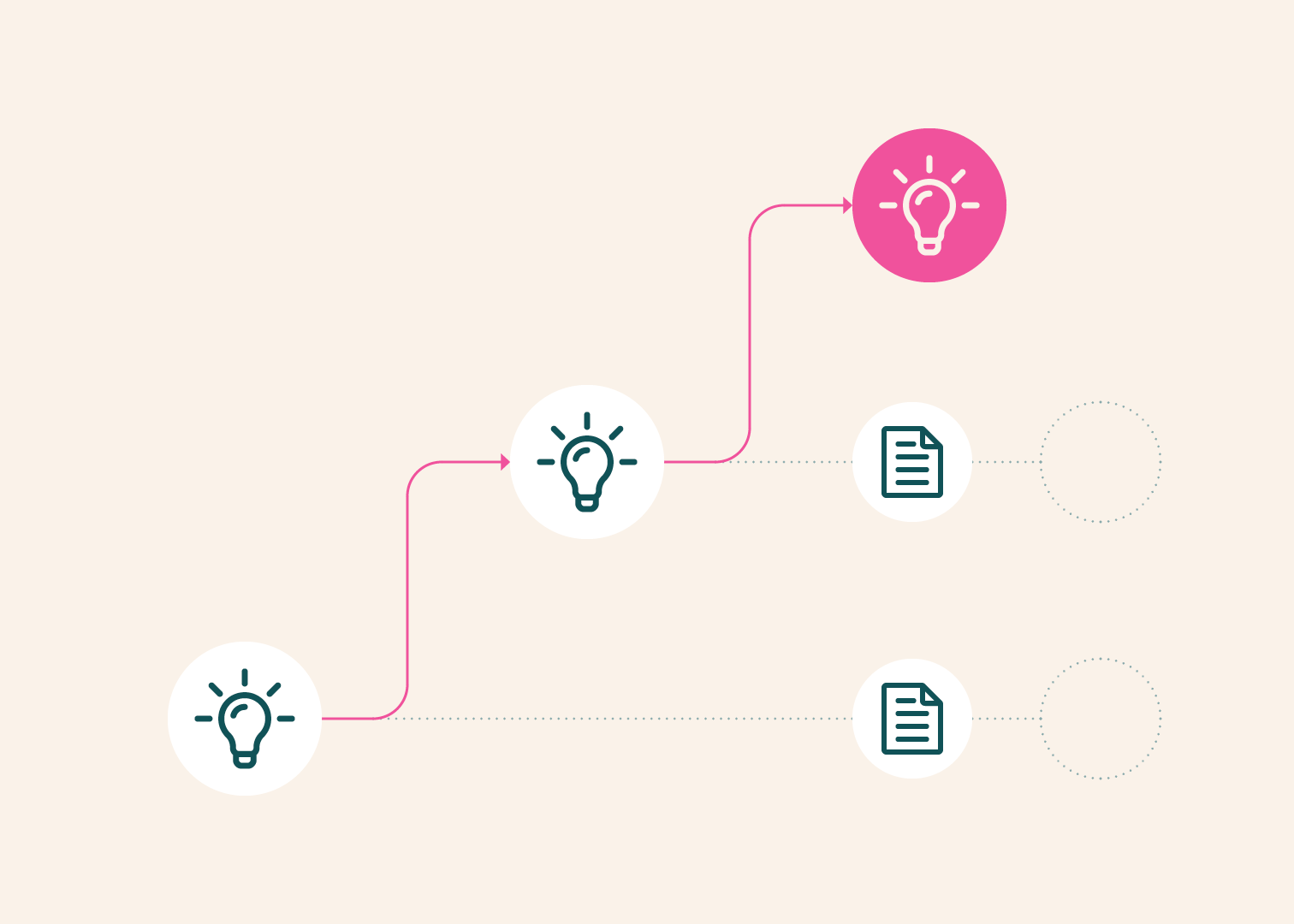
Encountering a model new paper can change a evaluation idea’s trajectory. The researcher might uncover that anyone has already addressed their proposed contribution, or uncover an unresolved draw back throughout the paper that conjures up a model new path of inquiry.
We title this course of a literature-initiated pivot: a change in evaluation path prompted by finding out prior work. It connects two actions that researchers normally must deal with individually: creating an idea and deciding which literature to measure it in opposition to.
With collaborators on the School of Pennsylvania, we developed LitPivot, a system that helps researchers navigate these pivots. Using papers retrieved via Asta Paper Finder, LitPivot organizes literature throughout the part of a proposal being edited, supplies critiques supported by excerpts from chosen analysis, and suggests revisions that researchers can accept, edit, or reject. LitPivot is supposed to be used for early-stage evaluation ideation, nonetheless the idea could presumably extend to longer writing duties (i.e., writing the introduction a part of a paper).
In a look at with 17 researchers, space consultants rated evaluation ideas developed with LitPivot as greater grounded throughout the literature than these developed with a textual content material editor and an AI chat software program. Contributors moreover perceived their revised evaluation ideas as additional novel and useful, and reported a stronger understanding of the surrounding literature.
LitPivot is likely to be supplied at UIST 2026 in Detroit. Study the paper proper right here.
Why pivoting is tough
Evaluation ideas evolve via collaborating with the literature. In our analysis of meeting notes from 4 achieved laptop science evaluation initiatives, we acknowledged 21 literature-initiated pivots all through all 4 initiatives. These fell into two varieties: differentiating an idea from current work to establish an idea’s novelty, and aligning an idea with current work to assemble on it. This endeavor itself went via two pivots sooner than we settled on its contributions.
These changes could also be troublesome to navigate. In a formative look at, 5 researchers developed proposals using a textual content material editor and commonplace search devices. They struggled to develop their ideas whereas critically evaluating them in opposition to the literature. When a paper challenged an idea’s novelty, they wished concrete suggestions for simple strategies to revise it, supported by prior work. These findings shaped LitPivot’s assessments, which pair literature-supported critiques with specific suggestions for revising the chosen part of an idea.
How LitPivot works
In LitPivot, a researcher begins by writing a short proposal in an editor and enabling what we title side highlighting, which segments an articulated idea into fully completely different facets (i.e., a problem, contribution, and evaluation). To check a proposed side, the researcher clicks that part throughout the draft. An adjoining panel groups related papers primarily based totally on the chosen side (e.g., grouping papers by the evaluation methods they use when the evaluation side is chosen) and highlights in all probability essentially the most associated groups. The researcher selects papers, requests an analysis, and opinions a steered revision alongside excerpts supporting the critique. The literature is then reranked primarily based totally on relevance to the revised side.
Significantly, LitPivot separates a evaluation idea into its draw back, proposed contribution, and evaluation plan. Each side has its private set and relevance score of related literature. LitPivot groups retrieved papers throughout the side being edited, letting the researcher choose which ones the system ought to make use of to judge the draft.
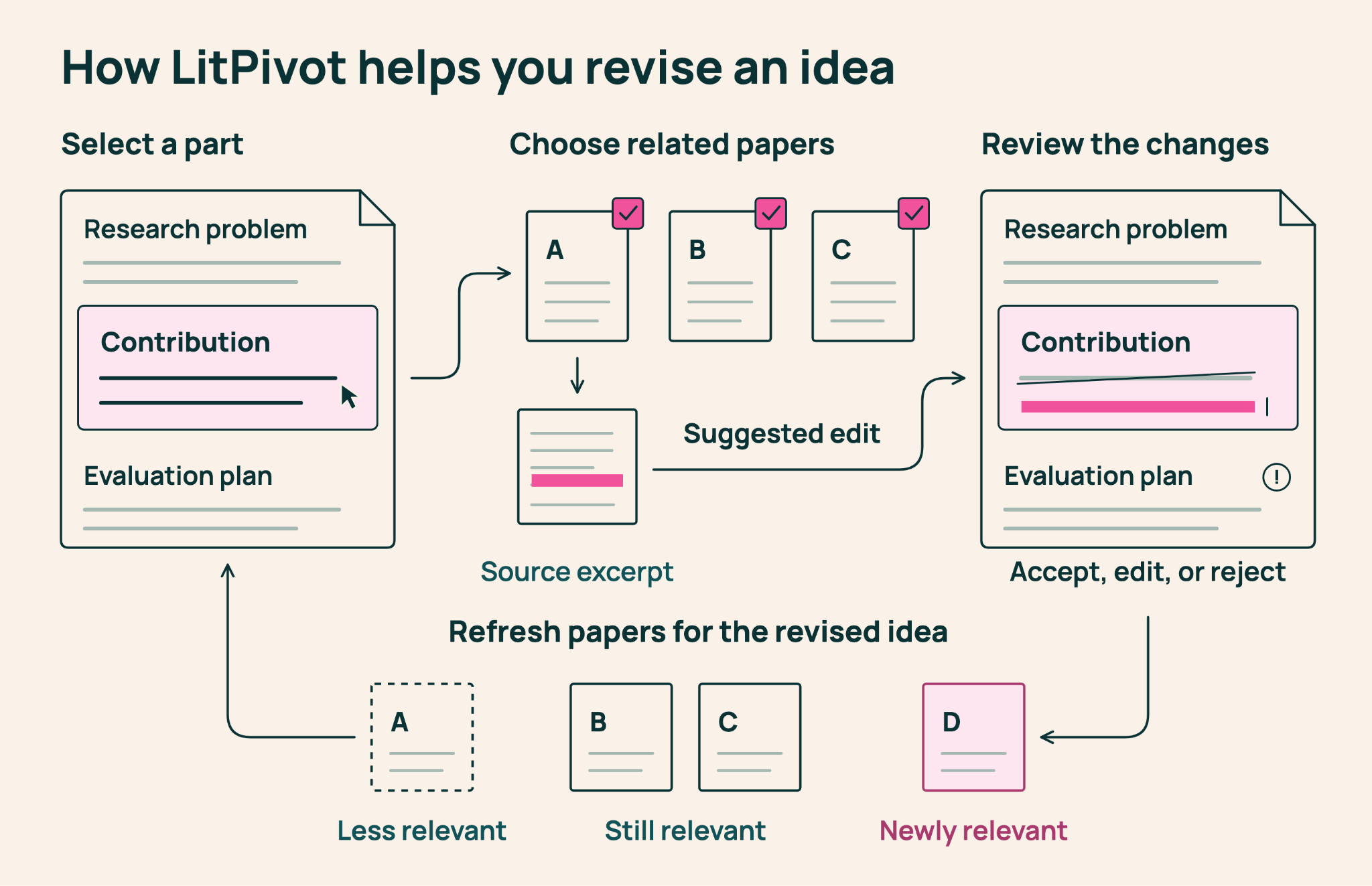
Alongside scientific-writing environments equal to Prism and agentic assistants equal to Claude Code, LitPivot explores a model new workflow for creating an early evaluation idea: deciding on literature to judge it in opposition to, using that proof to revise it, and reconsidering which papers matter because the idea changes. Its paper groups and linked critiques make these steps particular for each part of the proposal, whereas researchers administration every the draft and the proof used to judge it.
For a problem assertion, LitPivot appears for proof that the difficulty exists and causes it points. To guage a proposed contribution, it compares what the chosen papers have already addressed with the constraints and future work they describe, searching for remaining gaps. For an evaluation plan, it checks whether or not or not the proposed assessments deal with the evaluation question and the way in which comparable work has been evaluated. The system then suggests a rewrite with supporting quotes linked.
Altering one side of an idea can go away one different old school. LitPivot flags passages which can need revision, equal to an evaluation plan that not adequately evaluates a revised contribution. Researchers can accept, edit, or reject suggestions, and request new papers or refresh the literature score as their proposal develops.
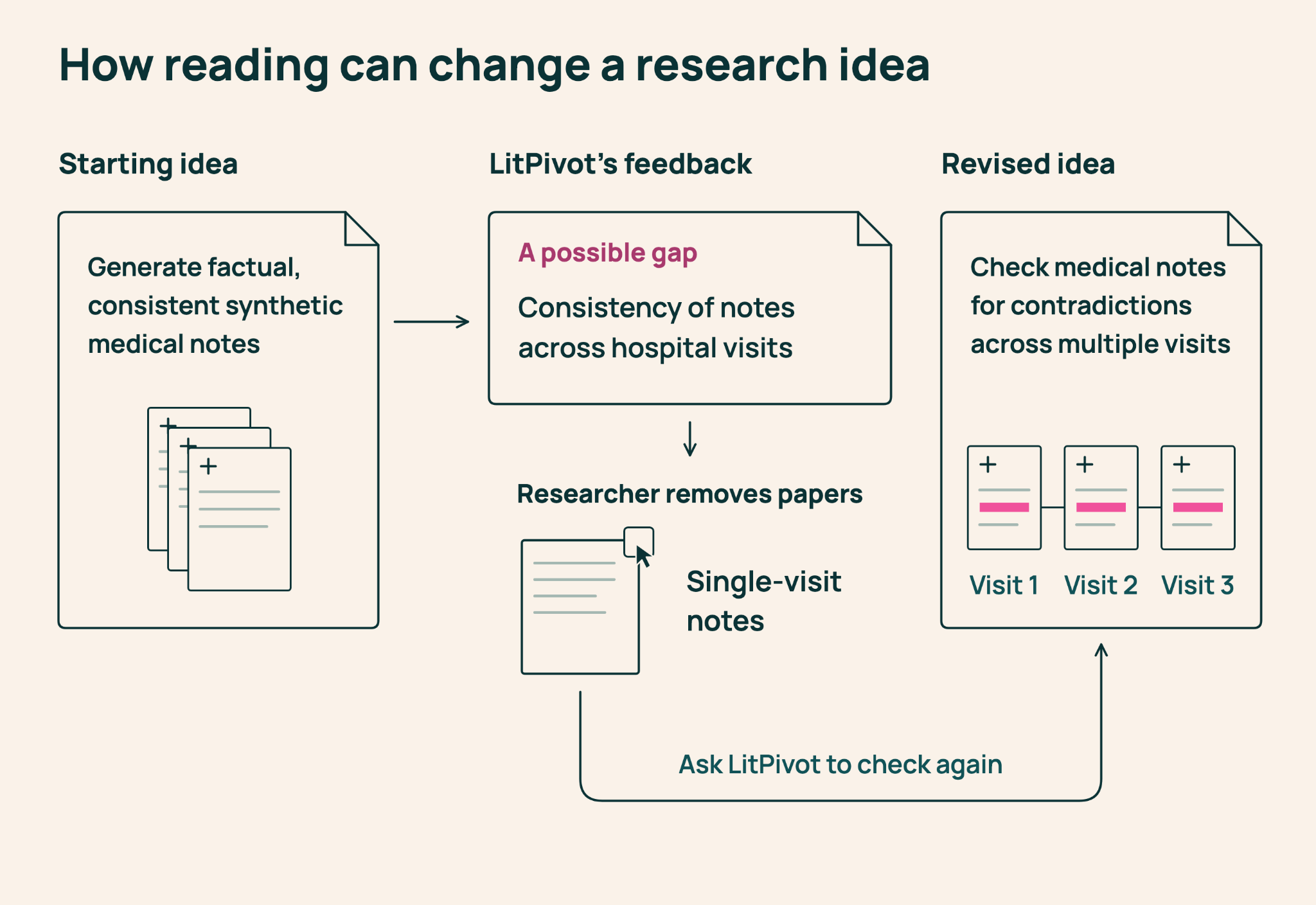
Paraphrased occasion from one look at participant.
Our findings
In our lab look at, 17 researchers each developed one assigned idea with LitPivot and one different with a baseline software program—a textual content material editor and an AI software program for asking questions on chosen papers. Every circumstances used the an identical assortment of papers. Two space consultants, unaware of which system had been used, rated the following proposals on a single criterion: how successfully they used associated literature to help and justify the idea. Proposals developed with LitPivot obtained elevated rankings.
Contributors within the an identical look at moreover reported a stronger understanding of the surrounding literature and better self-reported enhancements of their ideas’ novelty and usefulness with LitPivot than with the baseline. Space consultants moreover reviewed the people’ ideas and rated the ideas revised using LitPivot to be significantly greater grounded in associated literature.
One participant in our lab look at started with a proposal to generate fixed, factual synthetic medical notes. LitPivot acknowledged consistency all through plenty of hospital visits as a doable gap throughout the chosen literature. The participant reviewed abstracts and eradicated papers about single-visit notes. After one different analysis, they narrowed the proposal to detecting contradictions all through notes from plenty of visits. The occasion displays how revising an idea and deciding on the literature used to judge it would in all probability inform each other.
In a follow-up look at, 5 researchers used LitPivot on their very personal ongoing initiatives all through 30-minute durations. Contributors used LitPivot all through plenty of endeavor phases, not merely at first. Two used it to vet new ideas in opposition to the literature, whereas three used it to refine the framing of additional mature ideas. One researcher highlighted how seeing parallel concepts from fully completely different domains helped them reframe their contribution.
These analysis suggest that LitPivot can help every early exploration and the refinement of an current evaluation path.
Supporting scientific discovery
At Ai2, we’re creating AI to help researchers formulate testable ideas and research the proof behind them. Asta helps that effort via precept period from revealed findings (Theorizer), synthesis, and hypothesis period and testing on info (AutoDiscovery), whereas HARPA generates promising hypotheses educated by rising evaluation traits. Scideator lets researchers recombine elements of prior work into new ideas and assess their novelty, and IdeaSynth helps iterative refinement with recommendations grounded throughout the literature.
Our newest look at, Outdated Ideas, Novel Points, examines the bounds of automated novelty evaluation, displaying how small quick changes can alter an AI resolve’s verdict on the an identical ideas. LitPivot extends this line of labor by making the collection of associated literature part of the revision course of. Researchers can change which papers they use to judge a proposal as their idea develops, then use critiques and supporting excerpts to resolve straightforward strategies to revise it. The system connects these choices all through the proposal’s draw back, contribution, and evaluation plan.
We hope insights from LitPivot help scientists assemble on current information and swap early ideas into new contributions to their fields.